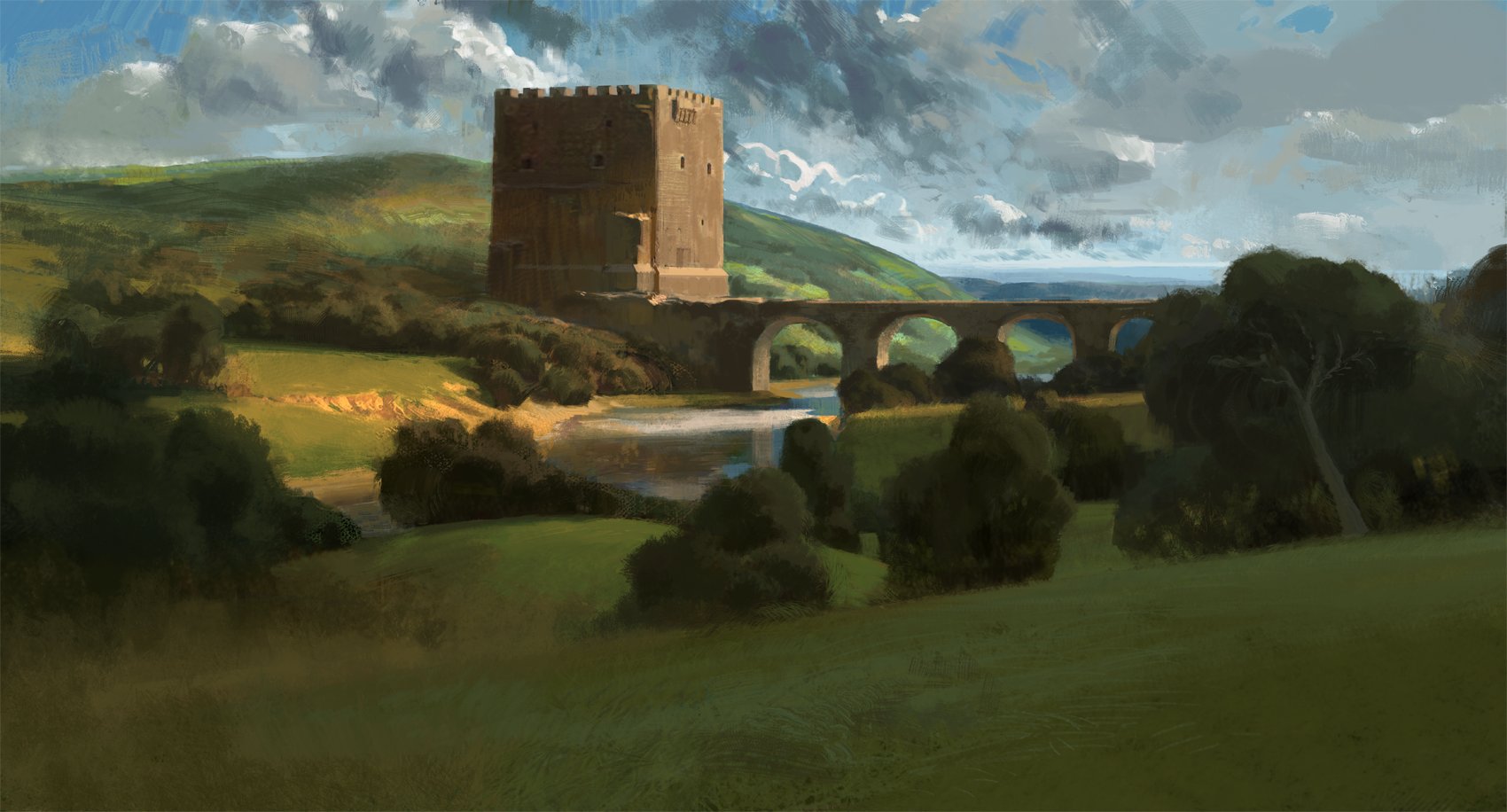
Spiacia
Spiacia is a fractured collection of city-states, all joined together by the royal Rossoviero family over 100 years ago.
The peninsula and 6 islands (the Cinchedige) are the most densely populated and commercially sophisticated region of the continent.
It is a land of extreme contradictions: unparalleled artistic beauty and civic pride alongside local warfare, political scheming, and urban squalor.
It is a setting of intense theatricality. A scholar or politician can be as dangerous as a mercenary, and a well-placed bribe is more effective than a siege engine. The weight of history is heavy, and daily life is conducted in the literal and metaphorical shadow of ancient monuments.
Spiacia has its monsters like anywhere else: a dragon is known to circle the Cinchedige, foul bugbears roam the south, and the land has ghouls and spirits throughout. There has even been rumor of a lich.
Spiacians are proud to speak the language Spiacian. A few of them would be familiar with the languages of the neighboring northern kingdoms. A good number would know dwarvish, and the scholarly would know elvish.
Spiacian names:
Masculine:
Agnolino, Alfonso, Anselmo, Bernardo, Benvenuto, Cambio, Cittadino, Domenico, Giotto, Iacopo, Leonardo, Marzocco, Orsino, Pero, Sismondo, Tancredi, Ulfilas, Vitale
Feminine:
Aconcata, Adelagia, Alda, Alessandra, Amata, Aurelia, Beldina, Castellana, Corbella, Divitia, Fabressa, Flora, Galitia, Ingrada, Merozia, Medonia, Ordina, Pucarella, Sibilia, Sovrana, Tullia, Verona
Ercavica, city
The largest city in the world. It’s famous for its factions (the nobility and the guilds) and magic colleges, and for being flamboyant, metropolitan, and fortune-loving.